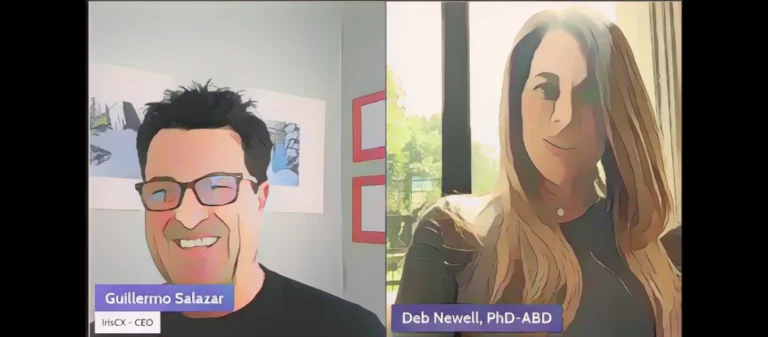

I first noticed Mark Brower because he was writing about time. About responsibility. About the quiet weight of doing meaningful work while we’re here. Not hustle-posturing. Not performance branding. Just conviction that felt earned, not rehearsed.
So when Mark joined Getting to Hell Yes, I wasn’t looking for tactics or growth hacks. I wanted to understand how someone builds a business when purpose isn’t a tagline, but a constraint. Something that shapes what you will and won’t do, who you will and won’t serve.
From feast-or-famine to durability
Responsibility, not ambition, initially guided Mark’s entry into property management.
In 2008, he was a commercial real estate broker with three kids and an income tied tightly to market cycles. When the market turned, the instability became impossible to ignore.
“I was losing money… and I realized I had to get off the feast-or-famine roller coaster.”
What he wanted wasn’t a better title or a bigger upside year. He wanted durability. Predictability. Something that could compound instead of reset every cycle. Property management wasn’t the dream—stability and legacy were. That choice, made under pressure, shaped everything that followed.
“People don’t come to us for property management. They come to us for the ability to make an impact.”
At the center of Mark’s business today is a deceptively simple idea: helping good people do more good.
Mark doesn’t believe landlords come to him because they want rent collected or maintenance coordinated. They come because being a landlord, especially an accidental one, is exhausting.
That reframing changes the buyer entirely. The real product isn’t management. It’s reduced stress in service of a longer-term outcome. If you can help someone stay in real estate for decades instead of a few frustrating years, the compounding takes care of the rest—financially, and in the ripple effects that money has on families, communities, and choices.
What makes this hard is that most landlords don’t actually know how to evaluate a property manager. They don’t have the context. So they default to what feels objective and safe: the lowest price, flat fees, guarantees. That’s why the $89-a-month operator signs doors by the hundreds.
Mark doesn’t compete there, and he doesn’t pretend to.
“If price is your priority, we’re not a fit and that’s actually a win for both of us.”
There’s discipline required to say that out loud. It means accepting slower growth in exchange for better alignment. It means trusting that not every deal is your deal. Mark isn’t trying to win everyone—he’s trying to build relationships that last long enough to matter.
Mark lives by a principle from Dan Sullivan: always be the buyer. He interviews prospective clients. He defines a buy box. He filters for a leadership mindset rather than urgency or anxiety.
“There’s nothing that diminishes your value faster than being willing to work with anyone on any terms.”
That stance protects the business, the team, and the client experience all at once. It also changes the economics. Fewer clients, longer relationships, higher lifetime value—not just in revenue, but in trust.
“Non-leaders think about cost as money leaving their hands. Leaders think about opportunity cost.”
Mark described what he sees as a fundamental gap in the market: a leadership problem among landlords.
Most landlords are accidental business owners. They’ve never been taught to think in opportunity cost, delegation, or long-term return on investment. They think in monthly cash flow, not enterprise value.
That distinction shows up everywhere—deferred maintenance, resident experience, turnover costs, long-term equity. Short-term thinking feels safe until you do the math. This is where Mark’s philosophy stops being abstract and becomes operational.
He’s also clear about roles. “You’re the business owner,” he tells clients. “I’m your business manager.” That sentence alone establishes expectations, filters out misalignment, and creates space for better decisions. It also explains why he’s comfortable letting certain prospects walk away.
“There’s nothing more expensive than the wrong client at the right price.”
In a market obsessed with more leads, faster growth, louder positioning—Mark is optimizing for alignment, enterprise value, and trust over time. He’s playing a longer game, and he’s willing to let others sprint past him in the short term if it means building something that compounds instead of burns out.
What I’m thinking about
Hell yes buyers don’t need convincing. They need clarity.
If you don’t define your buy box, the market will do it for you. Purpose isn’t soft—it’s a strategic filter. And one of the fastest paths to leverage is choosing who you’re willing to say no to.
Most businesses try to grow by saying yes more often. Real leverage often comes from saying no clearly, early, and with conviction.
Mark and I talked about why price-driven buyers quietly destroy value, how purpose becomes a competitive advantage, and what it really means to always be the buyer.
If you’re building for alignment instead of approval, this one could be helpful as you outlook into 2026.
Catch the replay and I’m curious: who are you actually building for?