
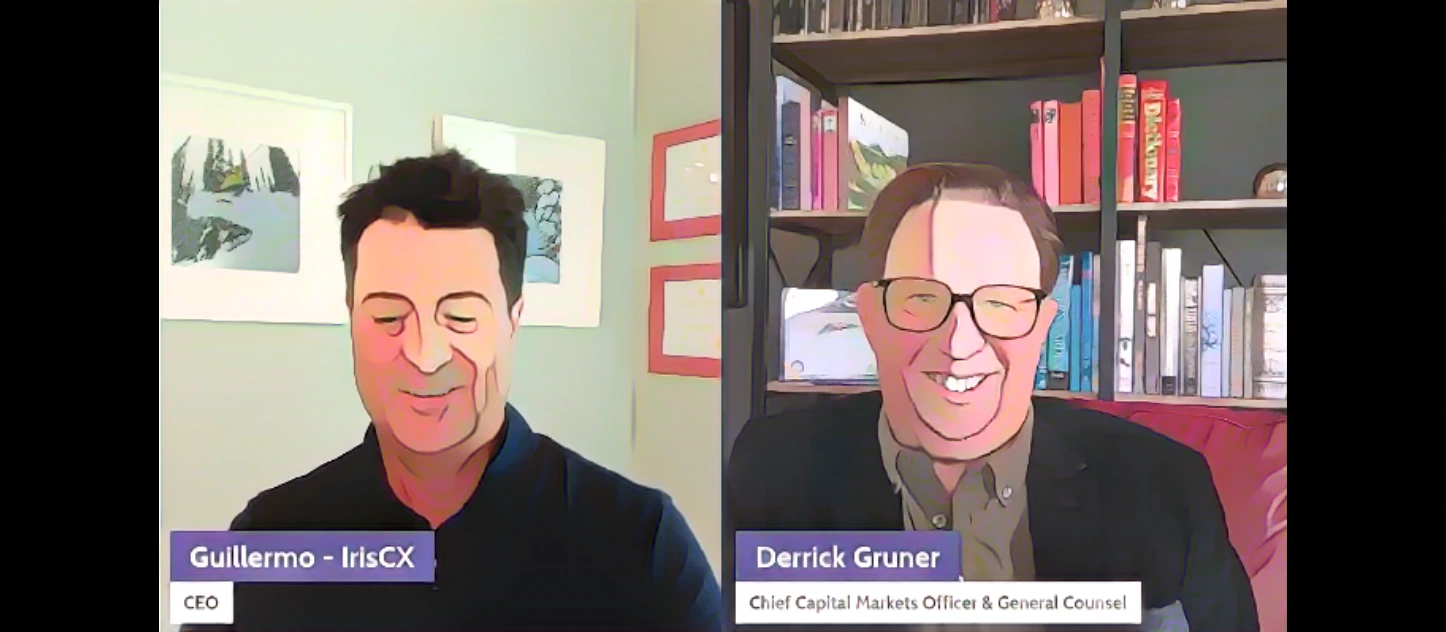
I met Derrick Gruner by chance, sitting next to each other at lunch during SFR West. Within minutes, we weren’t talking about property management or maintenance software. We were talking about debt. About leverage. About the invisible architecture that makes real estate possible.
Because here’s what most people in this industry don’t spend enough time thinking about: without debt, real estate is just expensive storage.
The magic of real estate, the reason it’s the greatest wealth creation vehicle on the planet is that you can lever up what you have with someone else’s money, collect cash from a third party to service that debt, and keep the equity appreciation for yourself. Take away that leverage, and the entire model collapses.
Derrick’s been in the private lending space for over 15 years. General Counsel at Anchor Loans. Co-founder at Genesis Capital. Now Chief Legal Officer at RWA Group, deploying construction debt across tier-one operators building single-family and BTR projects nationwide. He’s seen over $6 billion in originations with less than 1.5% default rates and zero capital loss.
So when we talk about getting to hell yes, we’re not talking about convincing borrowers to take money. We’re talking about something more fundamental: How do you build a debt business where both sides of the table for investors and borrowers will say Hell Yes consistently?
The Ecosystem No One Talks About
Most people think of lending as transactional. Borrower needs money. The lender provides money. The deal closes. But that completely misses the ecosystem.
“It’s a stream of commerce, right? You have a 401(k) or you have an IRA. You’re looking for a return on that investment. The custodians of those dollars put those dollars into pools, and now they’re looking for someplace to deploy that capital.”
Your retirement account is probably funding a construction project in Texas right now. Those dollars flow into institutional pools, which deploy into asset managers like RWA Group, who then lend to prolific builders developing housing across major MSAs.
Each touchpoint in that chain requires consistency. The 401(k) holder needs their coupon. The institutional investor needs predictable returns above their hurdle rate. The asset manager needs to deliver alpha without taking stupid risks. And the builder needs certainty of closeness and speed of execution.
The business model isn’t lending money. It’s de-risking capital flows at every level.
Why Interest Rates Didn’t Break Everything
When interest rates spiked in 2022-2023, an 8x increase in roughly 18 months which everyone assumed construction lending would evaporate. It didn’t. At least not for RWA’s borrowing base.
“Our borrowing base is interest rate sensitive, but they’re not as interest rate sensitive as people think. This money is twelve months on the inside and twenty-four months on the outside. When they’re looking at a pro forma, yeah, they’re looking at our cost of funds, but they’re looking at it against the backdrop of a short duration hold.”
The impact wasn’t on the debt side, it was on the exit. Built-to-sell projects slowed dramatically. But the development community is nimble. They pivoted to built-to-rent. Because the underlying fundamentals haven’t changed: we have a national housing shortage of 4-6 million units, and at current construction rates, that’s a 10-year build-out just to meet today’s demand.
That doesn’t factor in ongoing family formation, Gen Z aging into homeownership, or any immigration policy. The shortage isn’t going away. And as long as there’s structural demand, there’s a viable exit which means there’s a viable loan.
The Buy Box: Who Gets Money and Why
RWA Group doesn’t lend to hobbyists. They don’t chase the market to the bottom. They have a clearly defined buy box:
- Tier 1 Prime: 10+ successful exits in the last 2-3 years. Prolific builders who can close 10 properties in 5 months.
- Tier 1: 5+ exists in the last 2-3 years. Established operators with consistent track records.
- Tier 2: Emerging operators with proven competency but still building scale.
They don’t play in Tier 3 or 4 – new market entrants, first-time sponsors, or anyone who hasn’t demonstrated they can execute under pressure.
“We set our guidelines and we go to our LPs and we say, these are our guidelines. This is how we’re put together. A lot of our capital tends to be either silent capital or very quiet capital. What they’re looking at is they want us to manage the assets.”
This isn’t arbitrary gatekeeping. It’s fiduciary responsibility. When you’re managing other people’s retirement accounts, you don’t experiment. You build relationships with operators who have proven they can deliver and you give them the tools to keep building.
The Strategic Alliance Model
What makes RWA different isn’t just underwriting discipline, it’s how involved they are in the projects.
Every construction draw gets verified. Labor, materials, services are all confirmed on site. Did they actually install Pella windows? Is the quartz countertop real? This isn’t micromanagement. It’s asset management.
“We can see distress right away. Distress might manifest as there’s been a pronounced gap in the provision of labor, material, and services. If there’s a lag or a paucity of provision, that shows us distress.”
Early detection means early intervention. And intervention doesn’t mean foreclosure, it means partnership. Because RWA’s entire model depends on borrowers succeeding. A successful borrower repays on time, comes back for the next project, and refers to other tier-one operators.
The real product isn’t debt. It’s a strategic alliance with builders who are solving the housing crisis one home at a time.
The Two Customers Problem
Here’s what most people miss about the lending business: you’re not selling to one customer. You’re selling to two, and their needs are fundamentally different.
Customer 1: The Investor
They want predictable returns with minimal risk. They don’t want headaches, static, or surprises. They want a coupon. Consistently. That’s it.
Customer 2: The Borrower
They want certainty of closeness and speed of execution. When RWA issues an LOI (letter of intent), it’s money in the bank. That LOI is as good as a wire. The borrower knows the deal will close because RWA has already underwritten the file, the borrower, the project, and the exit strategy.
“If we give someone an LOI, that’s money. They can go to the bank with that. We’re going to do that project. And the reason we can do that is because we’re very credit centric.”
The hell yes moment for investors is predictable yield. The hell yes moment for borrowers is certainty. And the only way to deliver both is through operational consistency – 15 years of doing the same thing, the same way, at scale.
Why Debt is a Partnership, Not a Transaction
The worst position a lender can be in is owning a half-finished property. It’s not their business. They don’t want to be in property management, real estate sales, or construction completion. They want to be lenders.
But when a project goes sideways, RWA has step-in rights. They can complete the project. They will complete the project. Because going to market with REO (real estate owned) that’s half-baked is a loss for everyone.
“Fortunately, we’ve had very, very few defaults over the last six billion originations. Historically, I think we’ve had a default rate of less than one and a half percent and we’ve had zero capital loss.”
That track record doesn’t happen by accident. It happens because of credit discipline, active asset management, and most importantly choosing the right partners from the start.
You can’t de-risk a bad borrower. You can only avoid them.
The Market No One Sees
Here’s what I keep thinking about: most operators in this industry interact with debt only when they need it. They don’t see the full picture, the LP relationships, the fund management, the covenant structures, the asset management infrastructure.
But debt capital shapes everything:
- What gets built
- Where it gets built
- How it gets built
- Who gets to build it
When capital becomes constrained (like in 2022-2023), entire markets freeze. When capital becomes available on favorable terms, entire asset classes emerge like horizontal multifamily, which wasn’t even a concept five years ago.
We talked about Minneapolis-St. Paul: when one city opened the doors to development and the other introduced rental controls, the capital literally walked across the river. Minneapolis grew. St. Paul collapsed.
Capital has choices. And it votes with its feet.
What I’m Thinking About
Hell yes moments in debt aren’t about convincing anyone. They’re about alignment.
Investors say hell yes when they trust the asset manager to deliver predictable returns. Borrowers say hell yes when they trust the lender to close with certainty. And both only happen when you’ve built a track record of operational consistency.
The invisible hand of capital markets isn’t invisible because it’s hidden, it’s invisible because most people aren’t looking for it. But if you’re building in real estate, understanding how debt capital flows, who controls it, and what they optimize for is as important as understanding construction costs or market rents.
Maybe more important.
Derrick and I talked about why private debt chose construction lending over consumer lending, how underwriting guidelines become fiduciary commitments, and what it means to be a strategic partner to prolific builders.
If you’re raising capital, deploying capital, or borrowing capital, this one matters.
Catch the replay and I’m curious: Do you understand who’s actually funding your deals and what they need to say hell yes?