Ryan Killian, President of RENU Management On Why Single-Family Rental Finally Figured Out What Multifamily Knew All Along
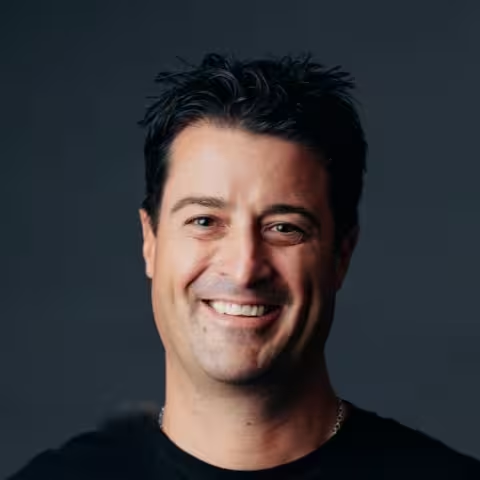
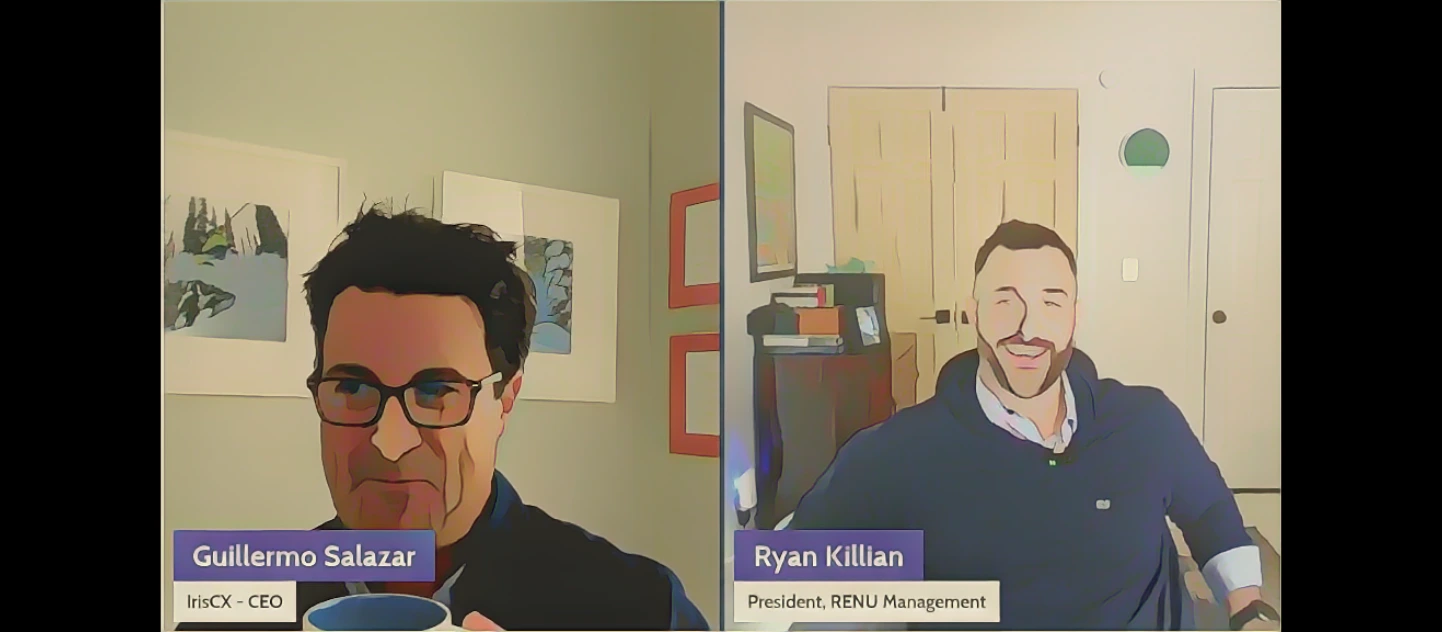
There’s a moment about halfway through my conversation with Ryan Killian where he says something that perfectly captures the inflection point single-family rental is living through right now.
“This space is in its operator era right now,” he tells me. “We’re in an era of operational excellence. This is the time, anybody who gets excited about what we’re talking about right now, this is your time. This is your time to tighten up, to think creatively, to challenge everything you thought you knew and that the space tells you you should know and that this is how things are done.”
Ryan isn’t talking about incremental improvements. He’s talking about fundamentally rethinking how single-family rental operates. And as President of RENU Management, a company that went from 1,000 homes to being prepared to manage portfolios of 10,000+ units in the span of a few years, he’s living it.
This is the story of a company that looked at the Wild West origins of SFR, learned from institutional scale operators like American Homes 4 Rent and FirstKey Homes, and decided to build something different.
Something that treats single-family rental like the sophisticated asset class it’s become, not the mom-and-pop business it used to be.
From the Wild West to Institutional Scale
Ryan’s journey through SFR reads like a timeline of the industry’s maturation. He started at American Homes 4 Rent in 2012 “the Wild West era”, as it’s fondly called in the SFR circle when institutional players were buying thousands of homes in the aftermath of the financial crisis and trying to figure out if scattered single-family assets could actually be operated at a profit.
“It was almost unbelievable what was happening as it was happening,” Ryan recalls. “That’s when I got my real first, I would say, maybe the light bulb moment of really how scale can impact a business.”
The question nobody could answer in 2012: could you own single-family scattered assets around the country, geographically decentralized, and actually operate them at a profit?
“The financial crisis offered an opportunity to get in at a low price point,” Ryan explains, “so that even if you were wrong and you couldn’t operate it at a profit, you weren’t going to get hurt too bad.”
History proved it could be done. Invitation Homes, American Homes 4 Rent, Progress, FirstKey all demonstrated it was absolutely an operating model that could scale, make money, and serve residents.
But by 2017, when Ryan moved to FirstKey Homes, that margin for error had evaporated. Home values were back to 85-90% of 2007 peaks. The early days of buying low were over.
“Underwriting had to get that much tighter,” he explains. “Understanding how the assets were going to perform once you acquired them was critical. And then actually performing, actually executing to that underwrite was the trick.”
That experience understanding the acute feedback loop between operations and acquisitions, learning what operational excellence actually looks like at institutional scale became the foundation for what he’d build at RENU.
Then COVID hit. And when his now-partner RENU’s founder Travis Bonwell called in late 2020 with an opportunity to build RENU with intention, Ryan saw the chance to architect operations differently from day one.
“We talked about how we would build the platform with intention, given all the things I had learned and seen and the industry had learned and seen from 2012 to that point,” Ryan tells me.
The Centralization Thesis Nobody Wants to Hear
Here’s where Ryan’s story gets interesting. And controversial.
RENU is aggressively centralized. They’ve pushed a significant portion of their work orders to vendors. And their field-tech:home ratio? It’s higher than most operators would dare attempt.
This isn’t popular in an industry that still romanticizes the on-site maintenance tech who knows every pipe in every house. But Ryan’s thesis is brutal in its clarity: there’s a massive sophistication gap in how properties are being operated, and if you’re still running things like it’s 2012, you’re not going to survive.
The results speak for themselves. RENU’s work order costs are significantly below industry average. Their first-time fix rates are strong. Their vendor network handles the volume their field techs can’t scale to manage.
And critically they’re not drowning in turnover.
“When you structure it right, people aren’t running themselves into the ground. They’re not on call every weekend. They’re not getting burned out within eighteen months,” Ryan explains.
This is the part of centralization nobody talks about: it’s not just about cost savings. It’s about building sustainable careers in an industry that’s historically ground people into dust.
We Don’t Lose on Price, We Lose on Choice
When I ask Ryan how RENU competes, he reframes the question entirely.
There are owners who want the traditional mom-and-pop property manager. The one who knows everyone’s name, shows up personally, operates on gut feel and relationships. That’s a valid choice.
But it’s not scalable. It’s not predictable. And it’s not data-driven.
I frame it this way in our conversation: “If you want predictability in your outcome, if you want reduced variability, you need systems. You need process. You need technology.”
I often use an analogy that Ryan connects with: “You go to IKEA, there’s ten thousand chairs that look exactly the same. You go to a custom craftsman in the middle of Pennsylvania and everyone’s going to look different. They’re going to be charming. That’s not what I want to buy when I’m managing a hundred-million-dollar portfolio. I want predictability.”
“Your loan payment isn’t variable,” I continue. “Your financing dates aren’t variable. Your banker doesn’t want to see variability in your NOI.”
Ryan lights up at this. The choice framework isn’t about being cheaper. It’s about being consistent. Measurable. Improvable. Those who choose RENU are choosing predictability over charming variability.
The Multifamily Expansion
Toward the end of our conversation, Ryan mentions that RENU is moving into multifamily. Not through acquisition. Through client demand.
Clients who own both SFR and multifamily portfolios saw what RENU was doing on the single-family side centralized operations, data-driven decision-making, tech-enabled efficiency and asked: can you do this for our multifamily assets?
The answer is yes. Because the operational model RENU built for scattered single-family across geographically decentralized markets is arguably harder than managing concentrated multifamily properties.
I share my excitement about this: “I’m thrilled to hear that you guys are going in the multifamily space because that opportunity is going to present itself. Those that have the ultimate choice, the owners, the buyers, they’re going to start seeing results that are different, never seen before. That’s so exciting.”
Ryan’s response captures the urgency: “Everything you said is exciting, makes me want to run through a wall.”
The timing is perfect. Multifamily is facing the same margin compression, the same labor shortage, the same pressure to professionalize that SFR faced five years ago. And RENU is showing up with a playbook that’s already been stress-tested.
The Six Sigma Moment
I share an observation that’s been rattling around in my head: “Rents aren’t going up. Not this year. Probably not for two or three years. More supply is coming online. The revenue lever is tapped out. So what’s left? Operations. That’s it. That’s the only lever you have control over.”
This feels like real estate’s Six Sigma moment. Manufacturing went through this in the ’80s and ’90s. Process optimization. Data-driven decision-making. Continuous improvement. The companies that embraced it survived. The ones that didn’t became case studies.
Real estate, especially residential real estate, is having that moment right now.
“That six Sigma approach to operations is going to reveal opportunities that never existed before,” I tell Ryan. “And those that have the ultimate choice, they’re going to start seeing results that are different, never seen before.”
Ryan’s conviction is absolute: “Find really smart people that are passionate about operational excellence and let them run. Give them tools, give them guidance, and let them run. Now is the time.”
I add: “If you’re feeling malaise about your role, then you’re probably in the wrong place.”
“That’s right,” Ryan agrees. “No reason to feel that at all.”
The Lesson He Wishes He’d Learned Sooner
When I ask Ryan what advice he’d give his younger self, his answer is immediate:
“Listen more.”
He pauses. “As you can tell, I don’t have a problem talking.”
“It takes one to know one,” I laugh.
“One of the lessons I got early on from a mentor was: hey, you have a lot of good things to say, but don’t let it drown out. Listen more. Listen for pain. Listen for frustration. People will tell you what they need. You don’t need to tell them.”
This isn’t just career advice. It’s an operational philosophy.
“Whenever I’m talking to a prospective client or a current client,” Ryan continues, “I try not to come out of the gate with the solution because you don’t know the solution yet. You might have part of the answer, but you certainly don’t have the whole answer. So listen, listen, listen, pay attention. The answer will surface if you are paying close enough attention.”
This is the discipline that separates good operators from great ones. The ability to sit with ambiguity. To listen deeply. To let the answer surface instead of forcing it.
“Nothing to add to that,” I tell him. And I mean it.
From My Side of the Mic
What gets me about Ryan’s story isn’t the technology. It’s the conviction.
He’s been in this industry long enough to have seen every cycle. The euphoria of 2012 when institutional capital first flooded in. The professionalization of 2017 when margins tightened. The chaos of COVID. And now, the margin compression of 2025 when revenue growth has stalled and operations is the only lever left.
And his read on where we are right now is unequivocal: this is the operator era.
Not the acquisition era. Not the asset appreciation era. The operator era.
And if you’re not excited about that if you’re feeling malaise, as we discussed you’re probably in the wrong seat.
Because the opportunity is massive. Tens of billions of dollars in real estate being managed inefficiently. Operators are still using the same playbooks from a decade ago. Owners accept variability in NOI because “that’s just how property management works.”
RENU’s thesis is that it doesn’t have to work that way anymore.
The technology exists. The data exists. The vendor networks exist. The operational models have been proven at institutional scale. All that’s missing is the willingness to challenge conventional wisdom.
What I keep coming back to is the choice framework. There are owners who want the artisan approach. The property manager who knows everyone’s birthday. The maintenance tech who’s been working on these homes for fifteen years.
That’s a valid choice. But it’s not the only choice. And increasingly, it’s not the best choice for owners who need predictability, scalability, and performance at institutional grade.
RENU is building the alternative. And the fact that they’re now bringing that model to multifamily tells you everything you need to know about where the industry is headed.
Because multifamily operators are starting to ask the same question SFR operators asked five years ago: “If I can’t count on revenue growth, where do I find margin?”
The answer is sitting right there in the operations budget. The work orders that cost too much. The truck rolls that shouldn’t have happened. The vendors who aren’t being managed. The field techs who are drowning in volume.
The opportunity is massive. The tools exist. The only question is: do you have the conviction to deploy them?
Ryan does. And watching him build RENU with that level of intentionality learning from a decade of institutional scale, avoiding the mistakes of the Wild West era, embracing centralization and technology and data it’s a masterclass in how to build for the era you’re actually in.
Not the era you wish you were in. Not the era you remember fondly. The era where rents aren’t growing, margins are compressed, and operational excellence is the only lever left.
That era.
And if you’re not excited about that, you’re missing the story.
Don’t Miss This Conversation
If you’re managing single-family or multifamily assets and wondering how to compete in a market where revenue growth has stalled… if you’re tired of accepting variability in your NOI because “that’s just property management”… if you’ve been told centralization kills culture and you’re not sure whether to believe it…
This conversation with Ryan Killian is required viewing.
Watch the full episode to hear Ryan break down exactly how RENU is operating at institutional scale with aggressive centralization. Learn why the choice framework matters more than price competition. And find out why the Six Sigma approach to property management isn’t coming. It’s already here.
You’ll learn why this is the operator era, why listening is more valuable than talking, and why the gap between operators who embrace data-driven operations and operators who don’t is growing exponentially.
The episode is live now.
Because here’s the truth: the revenue lever is tapped out. Supply is increasing. Rents aren’t going up. And the only competitive advantage left is how well you operate.
The operators who figure that out first? They’re going to eat everyone else’s lunch.
Which side of that equation do you want to be on?