
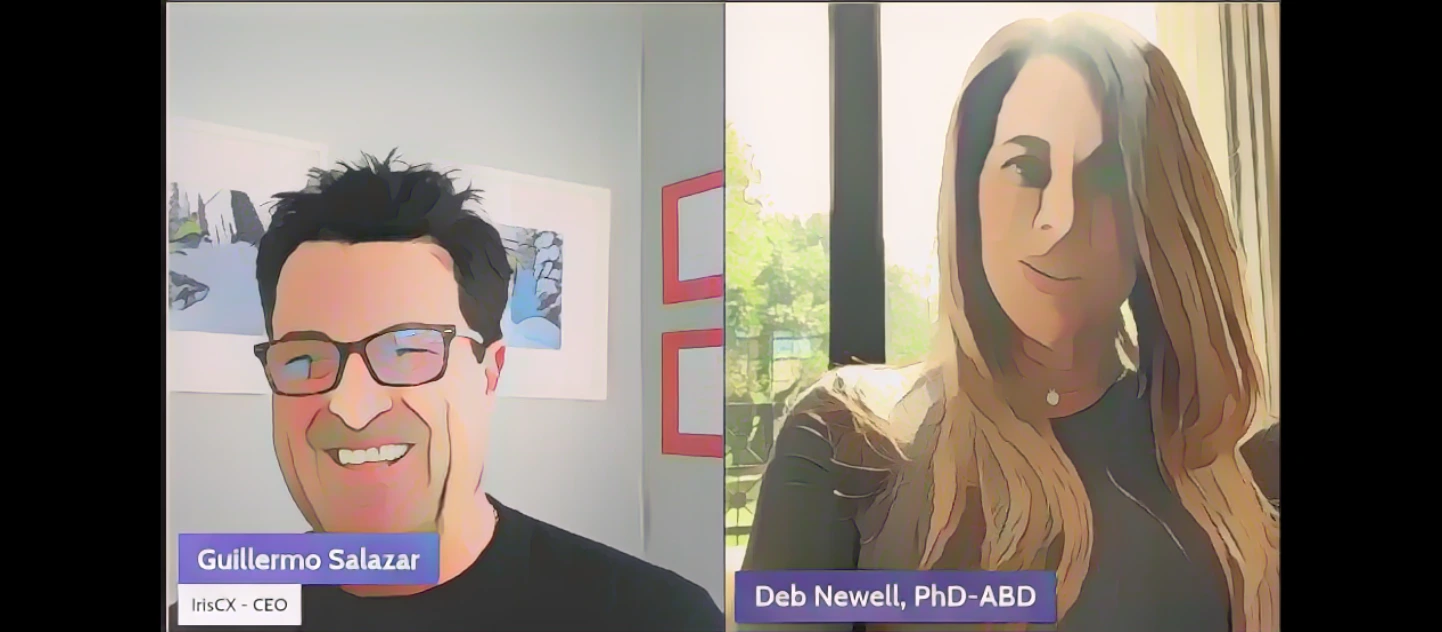
Deb Newell, Real-Time Consulting On Why Resident Expectations Are a Cop-Out and What Actually Needs to Change
“When I look back at when I started in the late nineties, early two thousands, for the first fifteen, even seventeen years of me doing this, nothing changed. No big technology shift, no big operational shift. It was just business as usual.”
She pauses.
“The same operational misalignments that I had even in the early two thousands are really the same misalignments today.”
Wait. The same problems? For twenty years?
If that’s true and I believe Deb, because she’s built, operated, and exited her own property management company, and now consults with operators across SFR, multifamily, affordable, and commercial then why haven’t we solved them?
That’s what this conversation is about. Not new problems. Not emerging trends. The persistent, fundamental issues that have plagued property management for decades and why we keep choosing to endure them instead of fix them.
The Universal Language
I ask Deb how she’s finding the market right now. Where’s the pull coming from?
“It’s interesting because I think each pillar of this industry, whether it’s SFR or multifamily, foundationally a lot of their problems are very similar,” she tells me. “Revenue is growing, but margins aren’t. Teams are busy, but results aren’t consistent. Leadership’s reactive instead of strategic. That’s the universal language I see across all assets.”
I stopped her there. “There’s a lot to unpack. Each one of those is a symptom of other problems and other priorities.”
“Exactly,” Deb agrees.
I frame something I’ve been thinking about: “If I go back four years ago, the operational excellence pieces that we’re suffering through today weren’t prioritized. But I’ve kind of come to accept they shouldn’t have been, because there’s a revenue motion.”
This is the tension. When you’re growing fast, operational excellence feels like a luxury. A nice-to-have. Something you’ll get to once you hit the next revenue milestone.
But that milestone keeps moving. And the operational debt keeps compounding.
“I think there’s a lot of organic change that happens,” Deb reflects. “For the first fifteen, seventeen years of me doing this, it was just the same. Nothing changed. There was no big shift, no big technology shift. It was just business as usual.”
Then something shifted.
“I don’t know what it was I wish I could say was it pre-COVID, post-COVID,” Deb continues. “I do feel like COVID helped invent a lot of movement. I think it was brewing in the background and then it made it project a little bit further. But the same operational misalignments I had in the early two thousands are really the same misalignments today. For whatever reason, it just wasn’t in our faces the same way it is today.”
She’s right. Social media wasn’t the same. Facebook existed, but there weren’t the groups, the collective conversations, the constant comparison to what everyone else is doing.
“The focus was on just door growth,” Deb explains. “There were no metrics, no KPIs, no discussion about that. But the struggles were very much real, hiring more people, wanting to add more doors. We were doing this to make money, but we just kind of accepted it.”
We accepted the problems. We normalized them. We built businesses around working harder, not working differently.
And now? Now we can’t ignore them anymore.
Choose to Solve It or Choose to Endure It
Early in our conversation, I mentioned something that’s been frustrating me: “These persistent problems aren’t being solved. We’re still talking about them all the time. People are talking about them. There are solutions out there. You’ve got a choice: you can choose to exist, to endure the problem, or do something different. But complaining about it isn’t going to do much.”
Deb laughs in agreement. “As long as everybody knows I’m always right, then it’s actually pretty easy. It goes really well.”
But beneath the humor is a serious point. We know what the problems are. We’ve known for years, maybe decades. So why aren’t we solving them?
Part of it is prioritization. When revenue is growing, operational problems feel manageable. You can throw people at them. You can work longer hours. You can accept thinner margins as the cost of growth.
But eventually, you hit a ceiling. Revenue plateaus. Margins compress. Turnover accelerates. And suddenly, the problems you’ve been enduring become existential.
That’s when operators call Deb.
“I serve as a consultant today, and I really only focus on the property management industry,” she explains. “I step in as a strategic advisor, an operational architect. My work focuses on aligning structure, people, process, technology, and financial performance so the business can scale without all that chaos.”
The operators she works with share common symptoms:
- Growth without structure
- Reactive leadership
- Unclear roles
- Inconsistent financial performance
- Teams working hard but not aligned
Sound familiar?
The Resident Expectations Cop-Out
Later in our conversation, I bring up something that’s been bothering me: “Everyone talks about resident expectations and they blame Amazon and Apple and all these things. But it really isn’t resident expectations. It’s our inability to set expectations, right?”
“It’s accountability,” Deb responds immediately. “All of this is a symptom of unclear expectations set by the company.”
She breaks it down: “Residents expect fast response, clear communication, fair enforcement, safe housing. They want consistency. If your policies aren’t standardized and you’re not trained on enforcement, it becomes a personality thing. ‘Oh, you’re saying that because you don’t like me.’ That’s not it at all.”
Hell yeah. Resident expectations aren’t the problem. Our inability to set and manage expectations is the problem.
“Consistency builds trust,” Deb continues. “Inconsistency builds online reviews.”
Think about that. Every bad review, every resident complaint, every escalation isn’t about unreasonable expectations. It’s about inconsistent delivery against expectations we set.
When one resident gets a maintenance request handled in 24 hours and another waits a week for the same issue, that’s not a resident problem. That’s an operational problem.
When one property manager enforces late fees and another doesn’t, that’s not a policy problem. That’s a training and accountability problem.
“So setting expectations and controlling the conversation,” I observe, “means resident expectations is a function of variability up or down. But it really isn’t resident expectations. It’s our inability to set expectations.”
Deb agrees. “If your policies aren’t standardized, if you’re not trained on enforcement, then it just becomes a personality thing. And that’s where trust breaks down.”
Exception Debt
Deb brings up something that resonates immediately: custom service offerings and exceptions for clients.
“When an owner of a company is bringing in new business and they make these exceptions for clients, that’s a problem,” she explains. “Because the team has to manage all of these different exceptions. You can create notes in your software that pop up ‘Hey, this owner wants to be called for every single maintenance work order’ and ‘This owner is okay with a thousand dollar threshold.’ That’s really hard on the team to do.”
“Why is that okay?” Deb asks. “It’s hard on you. Why would it be okay for you to throw it onto them?”
I share a concept I heard from a supply chain guy I used to work with: “The no pickles rule. All burgers have pickles. If you’re going to build a system that allows for no pickles, that costs money.”
“So if you’re gonna do that, then charge for it,” Deb responds. “Charge for ‘No pickles’.”
This is the operational reality most property management companies ignore. Every exception, every custom workflow, every “just this once” creates complexity that compounds across your entire operation.
Your property managers have to remember which owners want what. Your systems have to track different processes for different clients. Your training becomes impossible because there’s no standard way of doing things.
“When the burger is delivered with pickles after you said no pickles, what happens?” I ask.
“You’re mad,” Deb says.
Exactly. So either don’t offer no pickles, or charge enough to make it worth the operational complexity.
Make It Easy to Buy
This leads to a broader point about how property management companies structure their offerings.
“Make it easy,” Deb emphasizes. “Don’t make this hard. Staples used to have the easy button. That’s what I would say. Make it easy. Don’t make this hard.”
She continues: “Sometimes that menu of services is great to offer because these are some exceptions that we might want to be able to say yes to. ‘Can you do this?’ Yes, we can, for a fee. But you may not have it as part of your main menu because they’re outliers. They don’t always happen.”
She gives an example: “It’s kind of like when you have a lease and somebody wants to break a lease. I don’t necessarily put that clause in the lease because I don’t want them to know that they can break their lease. But sure, you can break your lease here’s the policy, the process, the procedure for it.”
“So it’s the same thing when an owner says, ‘Well, can you go do this?’ Most likely it’s yes, but let’s have a menu of what those choices and services could be.”
I love this framework. When you go to the gas station, there are three choices. You go to Starbucks, there are size options. You go anywhere, there’s structure around choice.
Property management shouldn’t be different. Make it easy to buy. Make it simple to choose. Make it transparent what costs what.
“If we’re the expert in terms of managing this asset,” I point out, “we should be recommending and offering. Make it easy to buy and make it simple that we can actually make a choice.”
This also solves the team complexity problem. If you have clear service tiers and a transparent menu of add-ons, your team knows exactly what they’re delivering for each client. No exceptions to remember. No special workflows. Just clear, consistent execution.
Trust Is the Universal Language
Throughout our conversation, Deb keeps coming back to one word: trust.
“Consistency builds trust,” she says. “Inconsistency builds online reviews.”
This is the universal principle underlying all the operational problems we’ve been discussing.
When owners don’t trust you’re managing their property well, they micromanage. They demand exceptions. They want to be called for every maintenance request.
When residents don’t trust you’ll handle their requests fairly, they escalate immediately. They post online. They withhold rent.
When your team doesn’t trust they’ll be supported when they enforce policies, they make exceptions. They avoid difficult conversations. They become inconsistent.
All of it breaks down without trust.
And trust is built through consistency. Through clear expectations, set proactively and delivered reliably. Through transparency about what you will and won’t do. Through accountability when things go wrong.
“Love language is trust, essentially,” I observe. “We want to have trust.”
Deb agrees. “Consistency on how we manage our residents builds trust. That’s the universal principle.”
From My Side of the Mic
Deb is brutally honest. It’s refreshing.
We’ve had the same problems for twenty years. We know what they are. We know how to solve them. And yet, most companies are still choosing to endure rather than solve.
Why?
Part of it is prioritization. When you’re growing, operational excellence feels like a luxury. When times are tight, no one knows where to start.
Part of it is complexity. Solving these problems requires changing processes, retraining teams, sometimes losing clients who won’t accept your new standards.
Part of it is comfort. We’ve normalized the problems. We’ve built businesses around working harder, not working differently. And changing that requires courage.
But the costs of not solving these problems keep compounding. Margins compress. Turnover accelerates. Growth plateaus. And eventually, the business you’ve built becomes a prison you can’t escape.
Deb’s framework for thinking about this is simple but powerful:
Structure: Do you have clear roles, processes, and systems?
People: Are they trained, aligned, and accountable?
Financial Performance: Do you understand your unit economics and where you’re actually making money?
When those three pillars aren’t aligned, you get the symptoms she described earlier: revenue growing but margins not, teams busy but results inconsistent, leadership reactive instead of strategic.
And here’s what I keep coming back to from this conversation: the resident expectations excuse.
We love to blame Amazon and Apple for creating unreasonable expectations. But that’s a cop-out. It absolves us of responsibility.
The truth is simpler and more empowering: residents want what we all want. Fast response, clear communication, fair treatment, safe housing, consistency.
Those aren’t unreasonable expectations. Those are baseline expectations for any service business.
The problem isn’t that residents expect too much. The problem is that we’re inconsistent in delivering what we promised.
And that inconsistency stems from unclear policies, inadequate training, poor systems, and accepting too many exceptions.
The no pickles rule crystallizes this beautifully. Every exception you accept creates operational complexity. Either standardize your offering or charge enough to make the complexity & risks worth it.
But most companies do neither. They accept exceptions to win business, then throw the complexity onto their teams without additional compensation or support.
That’s not sustainable. And it’s not fair to your team.
Deb’s solution make it easy to buy with clear service tiers and a transparent menu of add-ons is elegant because it solves multiple problems simultaneously:
It simplifies operations (fewer exceptions to track)
It improves margins (you charge appropriately for complexity)
It builds trust (clients know exactly what they’re getting)
It empowers teams (clear standards to execute against)
This is what operational excellence actually looks like. Not working harder. Not accepting more complexity. But ruthlessly simplifying what you do and executing it consistently.
The companies that figure this out in the next few years are going to have a massive advantage. Because they’ll have better margins, lower turnover, happier clients, and more satisfied residents.
Not because they worked harder. Because they worked differently.
And that’s what Deb has been saying for twenty years. The problems haven’t changed. The solutions haven’t changed. We just have to choose to implement them.
Stop complaining. Stop enduring. Choose to solve.
Don’t Miss This Conversation
If you’ve been blaming resident expectations for your operational problems… if you’re accepting exceptions that are killing your margins and burning out your team… if you know what needs to change but haven’t prioritized it…
This conversation with Deb is required viewing.
Watch the full episode to hear Deb break down the three pillars of operational alignment, explain why consistency is the only path to trust, and share exactly how to structure service offerings that are easy to buy and easy to deliver.
You’ll learn why the problems you’re facing have existed for twenty years, why they haven’t been solved, and what it takes to actually fix them.
The episode is live now.
Because here’s the truth: you have a choice. You can choose to exist, to endure the problem, or do something different.
But complaining about it isn’t going to do much.
Which are you going to choose?